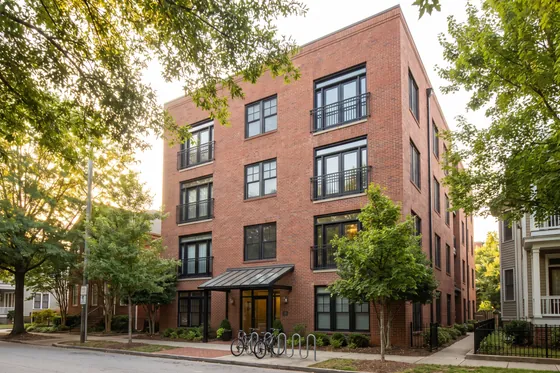
$279,000asking
- 1 bd
- 1 ba
- 790 sq ft
5210 Sevenwells Road · Unit 210
North Hills, Raleigh · Mid-rise flat
One bedroom, 790 square feet, and the lowest price on the board
Where we work
Street plans are drawn from each area's own coordinates. They show the shape of a place, not a property — no home on this site sits at a real address.
A different transaction, run differently
This is mostly a logistics problem and partly a patience problem. It is not the same job as selling a house you bought five years ago, and running it the same way is how people end up with two mortgages and a storage unit.
The decision that shapes everything else
There is no universally correct answer. There is a correct answer for your equity, your flexibility and the price band you are buying into — and it is worth ten minutes before anything else happens.
You know exactly what you have to spend, and your offer on the next place is not contingent on anything.
You may need somewhere to live for a few weeks. A rent-back from your buyer often solves this and costs less than storage plus a hotel.
Most downsizers, most of the time.
One move instead of two, and you are not choosing under time pressure.
You are carrying two mortgages or using a bridge product, and you may be forced to accept a lower number on the old house to stop the bleeding.
People with substantial equity and genuine flexibility.
No double carry, no interim housing.
A contingent offer is weaker, and in a tight price band it will lose to a clean one. In some segments it is simply not competitive.
Workable when the home you want has been sitting.
The part people skip
A condominium is a share of a building and a share of its liabilities. The unit is the easy part; the association is where the money is.
The reserve study tells you what is set aside for the roof, the elevators, the parking deck and the siding, and when each is next due. A thin reserve on a building with a fifteen-year-old roof is a special assessment waiting to be scheduled.
The minutes are where assessments get discussed for a year before they get levied. We read them. It is dull, and it is where a coming assessment shows itself long before anyone votes on it.
Project approval status matters because some loan types require the whole project to be approved, not just you. An older or heavily investor-owned project can be unfinanceable for certain buyers, which affects both what you can borrow and who can buy it from you later.
We pull all three before you spend money on an inspection, because that order is the one that saves people wasted expense.
On our board right now
Single storey and main-floor primary are different things. A main-floor primary in a two-storey house still means stairs to the guest rooms — worth deciding which you need.
$279,000asking
North Hills, Raleigh · Mid-rise flat
One bedroom, 790 square feet, and the lowest price on the board
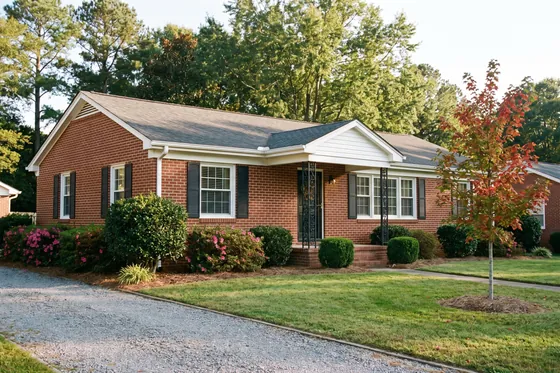
$289,000asking
Fuquay-Varina · Ranch
The least expensive house we have listed, and an honest description of why
$334,000asking
Garner · Brick ranch
Brick ranch, no HOA, a third of an acre, eight miles from downtown

Who does this here
Broker · downsizing and relocation · lives in Historic Oakwood, Raleigh
Rosalind works almost entirely inside Raleigh’s historic overlay districts and can tell you exactly what a certificate of appropriateness involves. She specialises in downsizing, which is mostly a logistics job and partly a patience job, and she reads condominium reserve studies for fun.
The six that come up every time
Usually yes. Selling first turns your equity into a known number and makes your next offer clean, which matters more than most people expect. The gap between the two closings is a logistics problem, and a rent-back agreement with your buyer solves it more often than not.
Start six months out and do one room a week; the cost of moving what you do not want is real money and real time. Estate sale companies, donation collections and junk removal all exist and all charge differently — we will give you names of people who have been good to previous clients and we take nothing for the introduction.
Not automatically, and the arithmetic is worth doing rather than assuming. Take two invented examples at the same rate: a $419,000 condominium carrying a $512 monthly fee has a higher total payment than a $460,000 townhome carrying a $165 fee. But the fee often covers water, exterior, roof and insurance you would otherwise pay separately, so the comparison has to be made on the whole monthly number, not the price. Run both in the estimator on any listing page.
The reserve study — how much is set aside for the roof, the elevators and the parking deck, and when they are next due. The minutes — special assessments are usually discussed for a year before they are levied. Project approval status — some loan types need the whole project approved, and an older building may not be. We pull all three before you spend money on an inspection.
Often not. If it has been your primary residence for two of the last five years, current federal rules exclude a substantial amount of gain from the sale of a main home — more for a married couple filing jointly. Long-held homes with large appreciation can still exceed it, and improvements you made over the years add to your cost basis, which is why keeping those receipts matters. Ask a tax professional; this is general information and not advice.
Filter for it. On our search you can require single-storey or a main-floor primary bedroom, which are different things — a main-floor primary in a two-storey house still means stairs to the guest rooms. It is worth deciding which one you actually need before you start touring.
The shape of it

Downsizing · selling a long-held house first · stairs are the reason
Read the reserve study before you fall in love with the building
Selling a house you have owned for twenty-six years is not the same job as selling one you bought five years ago, and the order matters: what the sale nets you sets the budget for what comes next. On the buying side, a condominium is a share of a building and of its liabilities. We read the reserve study, the last two budgets and three years of minutes before we let anyone write an offer, because a thin reserve on a building with an ageing roof is a special assessment that has not been scheduled yet.
Paint deck
Five schemes. Each one was measured against both themes before it was offered — text clears 4.6:1 on every surface in light and in dark. Your choice is remembered in this browser.
These settings are stored in this browser only. Nothing is sent anywhere. This site has not been through a formal accessibility audit, so it claims no conformance level — if something here does not work for you, tell us and we will fix it.
Four settings live in this browser. Your theme, your colour scheme, your reading settings and this answer — and nothing else. No cookies, no analytics, no advertising, no third parties, nothing sent to a server.Why.
Internal
Everything a visitor does not get: type, identity, logo and free colour. A visitor sees the paint deck in the bottom-left corner and only that.